Source Minimalist Washable PVC Placemat for Home, Office, and Cafe
Find 30 minimalist washable pvc placemat options from Chinese manufacturers. Compare features like waterproofing, heat resistance, and custom sizes for home, office, and restaurant use.
Key considerations
Products List




Comprehensive Sourcing Guide
Minimalist Washable PVC Placemat Sourcing Guide
Sourcing minimalist washable PVC placemats requires a careful balance between aesthetic simplicity and functional durability. The term "minimalist" often implies clean lines, solid colors, or subtle patterns, while "washable" indicates a material that can withstand frequent cleaning without degrading. PVC (polyvinyl chloride) is a common material choice for this category due to its inherent water resistance and ease of maintenance. Buyers must navigate a market where product listings may vary significantly in terminology, material composition, and actual performance characteristics. This guide provides a structured approach to evaluating suppliers, verifying technical specifications, and ensuring compliance with safety standards, all while maintaining the minimalist aesthetic desired by modern home and hospitality clients.
The procurement process for these items involves distinguishing between true PVC products and those that may be mislabeled or made from alternative materials like polyester or EVA. While the core keyword specifies PVC, observed market data shows a mix of materials including polyester and EVA, which offer different tactile and cleaning properties. Understanding these material differences is crucial for defining the right product for your specific use case, whether it is for high-traffic commercial environments or delicate residential settings. This guide focuses on helping buyers make informed decisions based on verified facts and trusted industry knowledge, ensuring that the final product meets both aesthetic and functional requirements.
Product Scope and Observed Listing Signals
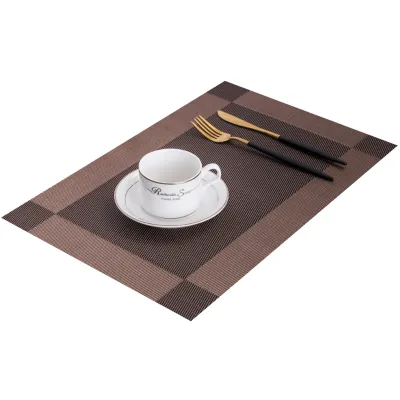
The observed product landscape for minimalist washable placemats reveals a diverse range of materials, shapes, and styles. Listings indicate the presence of products made from PVC, polyester, and EVA, each offering distinct advantages. PVC products are often highlighted for their waterproof and oilproof properties, making them suitable for easy cleaning. Polyester options may feature woven designs or jacquard patterns, offering a different texture and visual appeal. EVA materials are sometimes associated with antiskid features and creative designs. Buyers should carefully review product descriptions to confirm the actual material composition, as mislabeling can occur. The presence of "customized" diameter and shape options suggests that suppliers are flexible in meeting specific design requirements, allowing for tailored solutions.
Visual and stylistic attributes also play a significant role in the minimalist aesthetic. Observed styles include European, modern, fashion, retro, and creative designs. Colors range from white to various printed patterns, with some products offering logo printing capabilities. The weight of the products, observed in the range of 90-120g per piece, provides an indicator of material density and perceived quality. Packing configurations vary, with some products packed in PE bags and others in cartons, with quantities ranging from 4-6 pieces per pack to 200-300 pieces per carton. These variations impact logistics and storage, so buyers should consider the total volume and weight of the order when planning supply chain operations. Understanding these signals helps in filtering suppliers and products that align with the minimalist and washable criteria.
Technical Specifications to Verify
Verifying technical specifications is critical to ensuring the placemats meet functional requirements. Key attributes to confirm include material composition, thickness, and surface treatment. For PVC placemats, buyers should verify the thickness, as it affects durability and feel. Observed specifications mention "medium" thickness for some products, but this can vary. It is essential to request samples to assess the tactile quality and flexibility of the material. Additionally, the presence of features like waterproofing, oilproofing, and heat resistance should be confirmed through product descriptions or supplier communication. These features are crucial for washable placemats, as they determine how well the product can withstand spills and cleaning agents.
Dimensions and customization options are another vital area of verification. Observed standards include sizes such as 30x45cm, 33x48cm, 35x45cm, and a 38cm diameter for round options. Buyers should confirm if these dimensions are standard or if custom sizes are available. The ability to customize shapes, such as square or round, and patterns, including printed or plain designs, allows for greater flexibility in meeting brand or design requirements. Logo printing capabilities should also be verified, as this can be a key differentiator for branded products. Requesting detailed technical drawings or specifications from suppliers can help ensure that the final product matches the intended design and functional needs.
Compliance and Safety Documentation
Compliance with safety and environmental standards is paramount, especially for products used in food service and home environments. Buyers should prioritize suppliers who provide relevant certifications and test reports. Observed certifications include BSCI, LFGB, SGS, TUV, and Oeko-Tex. LFGB certification is particularly important for food-contact materials, ensuring that the product meets German food safety standards. REACH compliance is also a key consideration for products sold in the European market, although its status should be verified on a case-by-case basis. Oeko-Tex certification indicates that the textile components, if any, are free from harmful substances. Buyers should request copies of these certificates to verify their validity and scope.
In addition to certifications, buyers should inquire about the specific standards the products meet. Observed standards include LFGB, REACH, Oeko-Tex 100, and EN-71. EN-71 is relevant for toy safety, which may not be directly applicable to placemats but indicates a high level of safety testing. It is important to clarify which standards apply to the specific product being sourced. Buyers should also ask about the testing procedures and laboratories used for certification. Understanding the compliance landscape helps mitigate risks associated with product recalls or regulatory non-compliance, ensuring that the sourced placemats are safe for their intended use.
Cost Drivers and Commercial Terms
Understanding the cost drivers and commercial terms is essential for effective procurement planning. The observed price range for these products is $0.19 to $13.99, reflecting significant variation based on material, design, and customization. MOQs (Minimum Order Quantities) range from 5 to 5000 pieces, with some products having a specific MOQ of 3000 pieces. Higher MOQs often result in lower unit prices, so buyers should evaluate their volume requirements against cost savings. Payment terms typically involve a deposit, such as 30% T/T in advance, with the balance due before shipping. This structure is common in B2B transactions and helps manage cash flow and risk for both parties.
Lead times and delivery options are also critical commercial considerations. Observed lead times vary based on quantity and specific requests, with suppliers offering various delivery options. Buyers should clarify the expected production time and shipping duration to plan inventory levels effectively. Packing configurations, such as 12 pieces per PP bag or 360 pieces per carton, impact shipping costs and storage efficiency. Negotiating favorable terms, such as free samples or reduced shipping costs for larger orders, can enhance the overall value proposition. Understanding these commercial dynamics allows buyers to make informed decisions that align with their budget and operational needs.
Supplier Qualification and Quality Control
Supplier qualification is a crucial step in ensuring the reliability and quality of the sourced products. Buyers should assess suppliers based on their production capabilities, quality control processes, and past performance. Requesting references or case studies from previous clients can provide insights into the supplier's reliability. It is also important to verify the supplier's manufacturing facilities, either through virtual tours or on-site visits if feasible. Quality control measures, such as in-process inspections and final product checks, should be clearly defined and agreed upon. Buyers should specify their quality expectations in the purchase contract to ensure accountability.
Establishing a robust quality control plan is essential for maintaining product consistency. This plan should include criteria for material inspection, dimensional accuracy, and visual appearance. Buyers may consider hiring third-party inspection services to conduct pre-shipment inspections, ensuring that the products meet the agreed-upon standards. Clear communication channels with the supplier are vital for addressing any quality issues promptly. Implementing a feedback loop to share inspection results and corrective actions can help improve the supplier's performance over time. By prioritizing supplier qualification and quality control, buyers can minimize risks and ensure a steady supply of high-quality minimalist washable PVC placemats.
Long-Term Procurement Checks
Long-term procurement success depends on continuous monitoring and relationship management. Buyers should regularly review supplier performance metrics, such as on-time delivery rates, product quality consistency, and responsiveness to issues. Establishing key performance indicators (KPIs) can help track these metrics objectively. Regular communication with suppliers, including periodic business reviews, fosters a collaborative partnership and allows for the identification of improvement opportunities. Staying informed about market trends and technological advancements in placemat manufacturing can also help buyers stay competitive and innovative.
Adapting to changing market demands is another critical aspect of long-term procurement. Buyers should remain flexible in their product specifications and order volumes to accommodate shifts in customer preferences or business needs. Diversifying the supplier base can mitigate risks associated with single-source dependency. Building strong relationships with multiple suppliers provides options and leverage in negotiations. Additionally, staying compliant with evolving regulatory requirements and sustainability standards is essential for long-term viability. By implementing these long-term checks, buyers can ensure a resilient and efficient procurement process for minimalist washable PVC placemats.
FAQs
What materials are used for minimalist washable pvc placemat?
The product is made from PVC material, which ensures durability and ease of cleaning. Some variations also utilize polyester or EVA for different texture and feel requirements while maintaining the washable characteristic.
Can I customize the size and shape of the placemat?
Yes, customization is available for both size and shape. You can request specific dimensions like 30x45cm or 38cm diameter, and choose between square or round shapes based on your specific design needs.
Which certifications do the manufacturers hold for safety?
Manufacturers hold several key certifications including BSCI, LFGB, SGS, TUV, and Oeko-Tex. These ensure the products meet international safety and environmental standards for food contact and general usage.
How is the minimalist washable pvc placemat packed for shipping?
Packing options vary by model but typically include PE bags or 12 pieces per PP bag. Bulk shipments are usually arranged in cartons containing 200 to 360 pieces depending on the specific product model selected.
What is the minimum order quantity for these placemats?
The minimum order quantity ranges from 5 to 5000 pieces depending on the supplier and product model. Some specific models require a higher MOQ of 3000 pieces, while others allow smaller trial orders.
Are the placemats waterproof and heat resistant?
Yes, the products feature waterproof and heat resistant properties suitable for home, office, and restaurant use. This ensures they can withstand spills and hot dishes without damage or degradation of the material.
Where are these placemats manufactured and shipped from?
The products originate from China, specifically from the Zhejiang region. This location allows for efficient manufacturing and shipping logistics to meet various international delivery requirements and lead times.